Canadian Garbage on the Rise Again Newspaper
Why some countries are shipping dorsum plastic waste material
Past Reality Check team
BBC News
Paradigm source, Getty Images
A growing number of countries are taking a stand and demanding that nations accept back their waste material.
Many wealthy countries send their recyclable waste overseas considering information technology's cheap, helps run across recycling targets and reduces domestic landfill.
For developing countries taking in the rubbish, it's a valuable source of income.
But contaminated plastic and rubbish that cannot be recycled often gets mixed in and ends up in illegal processing centres.
So where is this happening and why is action being taken at present?
Image source, Getty Images
The European Union is the largest exporter of plastic waste, with the US leading equally the summit exporter for a unmarried country.
But only a tiny fraction of all plastics ever produced has been recycled.
Oftentimes, materials that can't exist recycled end up beingness burned illegally, dumped in landfills or waterways, creating risks to the surroundings and public health.
Worries virtually receiving such waste has forced countries to act.
The Philippines has only shipped back tonnes of rubbish to Canada that information technology said was falsely labelled equally plastic recycling in 2013 and 2014.
This month Malaysia sent back five containers of plastic waste material to Spain after it was found to be contaminated.
Malaysia says upwardly to 3,000 tonnes of rubbish will presently be returned to the UK, Us, Nippon, Communist china, Canada, Commonwealth of australia, the Netherlands, Germany, Saudi arabia, Singapore, Bangladesh, Norway and France.
To sympathize why these countries were swamped with so much waste, you demand to look to Mainland china.
Until January 2018, People's republic of china imported most of the world's plastic waste material.
But due to concerns about contamination and pollution, it alleged it would no longer buy recycled plastic fleck that was not 99.five% pure.
Paradigm source, Getty Images
The bear on of Red china'southward ban
Global plastic waste exports fell - dipping by most half by the end of 2018, compared with 2016 levels, according to Greenpeace analysis.
At that place were reports of plastic waste set for export piling up, and some was diverted to other countries.
Malaysia, Vietnam, Thailand, Indonesia, Taiwan, South korea, Turkey, Bharat and Poland all took upward the slack.
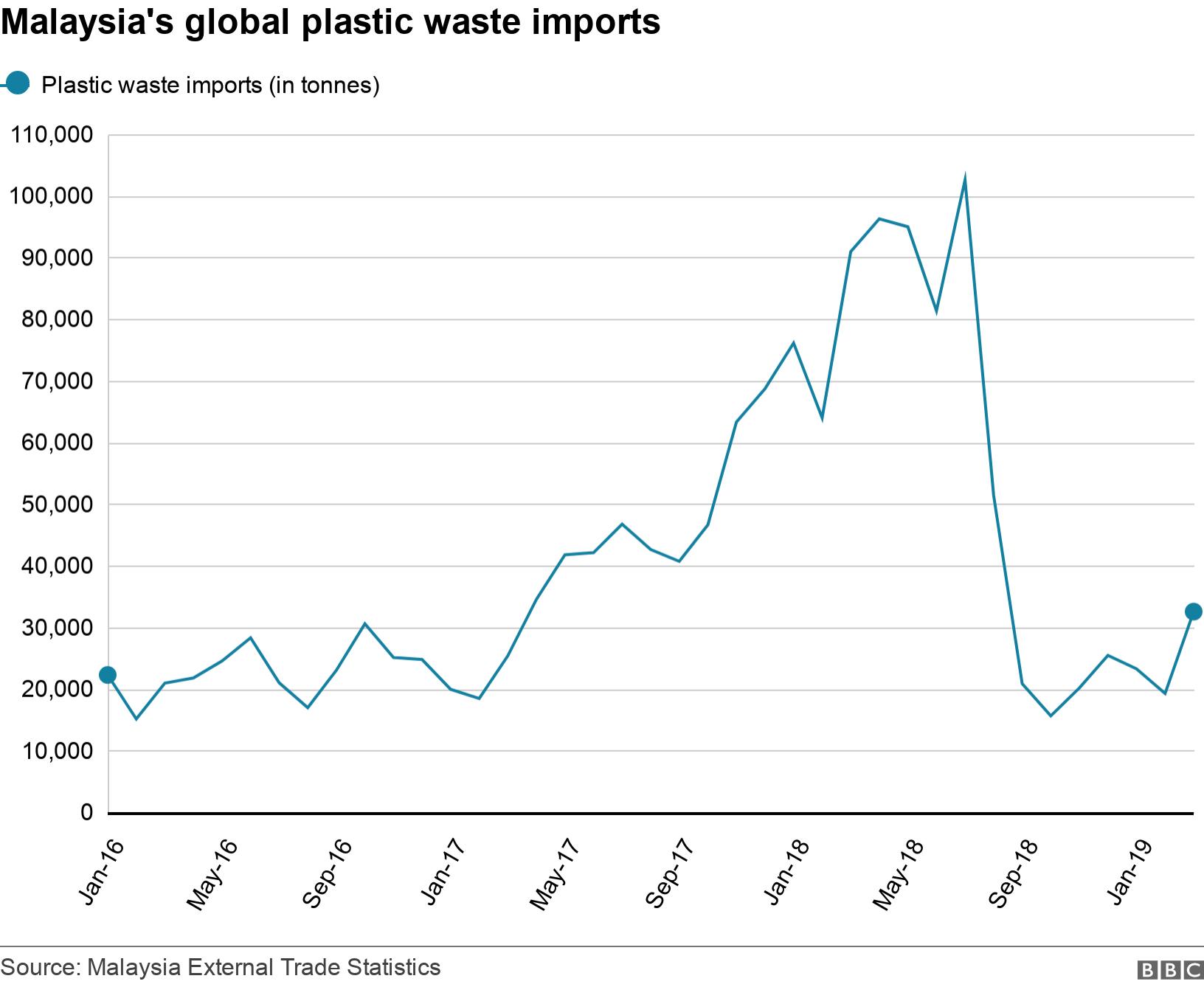
Malaysia took a major share - the plastic waste matter it imported from 10 countries in simply the first six months of 2018 was nearly as much as the total information technology received in 2016 and 2017.
But the rubbish arriving in these countries wasn't sufficiently recyclable, and it has acquired issues.
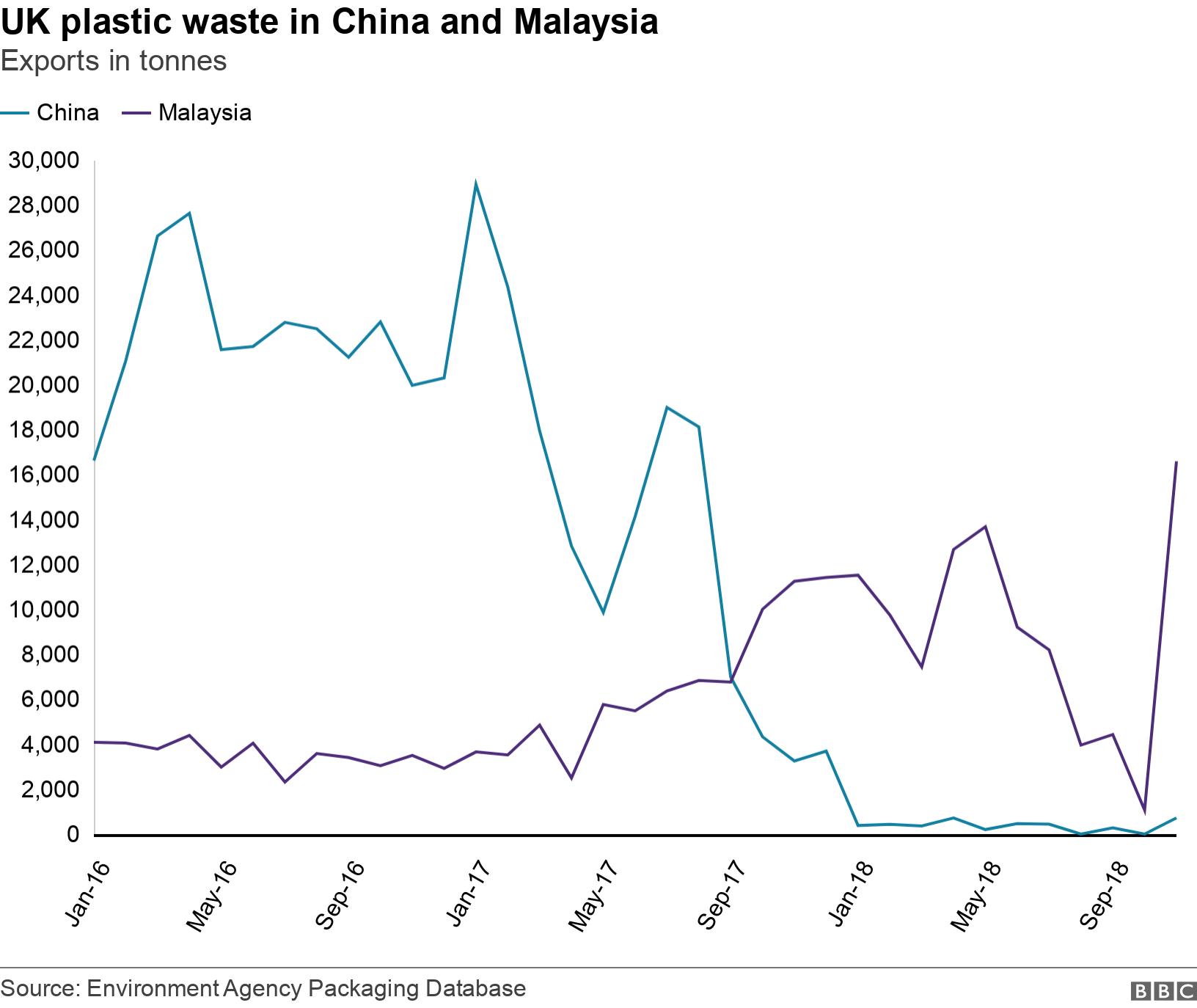
The Great britain has been singled out by the Malaysian regime.
"What the citizens of the UK believe they send for recycling is really dumped in our country," said Malaysian Government minister Yeo Bee Yin.
Countries taking action
Importing countries have found the surge of waste hard to manage and this has led to new controls in some countries.
Poland, in May last year, announced tougher rules after multiple fires at waste dumps, and linked the rising in illegal rubbish imports to the Prc ban.
Thailand has temporarily prohibited plastic waste imports and says information technology will implement a full ban by 2021.
Malaysia has revoked import permits and has been clamping down on illegal processing plants.
Vietnam is no longer issuing new licences and will bar all imports of plastic flake past 2025.
In October, Taiwan said it volition simply import unmarried source plastic waste matter.
Republic of india expanded its ban on solid plastic waste imports this March.
Taking India's delivery to fight against plastic pollution further, India bans import of solid plastic waste material/fleck into the country.
— MoEF&CC (@moefcc) March 6, 2019
The BBC is not responsible for the content of external sites.View original tweet on Twitter
Notwithstanding, there is withal an overwhelming demand for locations to send plastic and other waste to for recycling, and the claiming of how to dispose of it remains.
At that place are indications that afterward some initial success of the import restrictions, these countries are starting to take in larger volumes of waste once more.
The Global Alliance for Incinerator Alternatives (Gaia) says after a clear dip, "imports have begun rising again in the final quarter of 2018, suggesting challenges in enforcing respective country bans".
In 2016, 235 million tonnes of plastic waste was generated globally.
On electric current trends, this could reach 417 meg tonnes per year by 2030.
charetteanistring1947.blogspot.com
Source: https://www.bbc.com/news/world-48444874
0 Response to "Canadian Garbage on the Rise Again Newspaper"
Post a Comment